Patiënten met longkanker hebben een grotere overlevingskans door geïndividualiseerde therapie. Dat blijkt uit onderzoek van Joline Lind van het VUmc.
Recent onderzoek heeft geleid tot het ontwikkelen van nieuwe doelgerichte therapieën. De belangrijkste voor longkanker zijn de epidermale groeifactorreceptor (EGFR) remmers en de angiogeneseremmers.
De therapieën bleken effectief, maar niet bij alle patiënten. Lind zocht daarom ook naar patiënt- of tumoreigenschappen die voorspellen welke patiënten geholpen kunnen worden met welke middelen.
Source: http://www.nu.nl/gezondheid/2769641/grotere-overlevingskans-longkanker.html
Thursday, March 22, 2012


Can you build a human body?
Will we ever grow replacement hands?
 It might seem unbelievable, but researchers can grow organs in the laboratory. There are patients walking around with body parts which have been designed and built by doctors out of a patient's own cells. Dr Anthony Atala, director of the Institute for Regenerative Medicine at the Wake Forest Baptist Medical Center in North Carolina, US, has made breakthroughs in building bladders and urethras.
He breaks tissue-building into four levels of complexity.
Of course growing a hand is even more challenging than anything being tried in laboratories so far. Will it ever be possible? "You never say never, but certainly it's something I will most likely not see in my lifetime," Dr Atala concluded.
Source: http://www.bbc.co.uk/news/health-16679010
Date: 13-03-2012
Is the Six-Million-Dollar Man possible?
Science fiction is littered with the theme of upgrading the human body with machinery like in the 1970s classic TV series The Six Million Dollar Man.
 Meanwhile, as we have been discovering in the Bionic Bodies series, bionics are having a transformative role in the real world. Artificial hearts implanted into the chest can keep patients alive until a transplant becomes available. Cochlear implants have restored hearing to people who were once deaf. Bionic eyes are giving sight to the blind and a range of hands, arms and legs are restoring lost movement.
Timescales
Current bionic body part replacements can imitate human function, but considerable technological developments will be necessary before entering an era of enhancement. Dr Anders Sandberg, from the Future of Humanity Institute at the University of Oxford, told the BBC: "I do think it is possible to reconstruct a body quite easily and get into a six-million-dollar man situation." For the next 10 years, he thinks the field will be at the level of "pretty nice prosthetics", but would then start to be "significantly better" than the real thing. He said: "I think mid-century, I would be rather surprised if there wasn't a lot of implants and enhancements around."
 The Japanese company Cyberdyne has already developed a suit called Hal. It can help people who are no longer able to walk to regain their mobility by picking up electrical signals from the nerves which used to tell limbs to move and converting them into instructions for the suit. The other option for Prof Sharkey is devices which can be controlled by thought, but which are not part of the human body.
Source:
http://www.bbc.co.uk/news/health-16632764
http://www.bbc.co.uk/news/health-17153052
Date: 05-Mar-2012
Can you build a human body?
Technology has always strived to match the incredible sophistication of the human body. Now electronics and hi-tech materials are replacing whole limbs and organs in a merger of machine and man.
Later this year a team of researchers will try out the first bionic eye implant in the UK hoping to help a blind patient see for the first time. It is one of the extraordinary medical breakthroughs in the field, which are extending life by years and providing near-natural movement for those who have lost limbs.
Over the coming weeks, BBC news will explore the field of bionics in a series of features. We start with a selection of the latest scientific developments.
The Bionic Bodies series on the BBC News website will be looking at how bionics can transform people's lives. We will meet a woman deciding whether to have her hand cut off for a bionic replacement and analyse the potential to take the technology even further, enhancing the body to superhuman levels. The series continues on Wednesday with a look at some of the earliest prosthetics from ancient Egypt.
Source: http://www.bbc.co.uk/news/health-17235058

He breaks tissue-building into four levels of complexity.
- Flat structures, such as the skin, are the simplest to engineer as they are generally made up of just the one type of cell.
- Tubes, such as blood vessels and urethras, which have two types of cells and act as a conduit.
- Hollow non-tubular organs like the bladder and the stomach, which have more complex structures and functions.
- Solid organs, such as the kidney, heart and liver, are the most complex to engineer. They are exponentially more complex, have many different cell types, and more challenges in the blood supply.
Of course growing a hand is even more challenging than anything being tried in laboratories so far. Will it ever be possible? "You never say never, but certainly it's something I will most likely not see in my lifetime," Dr Atala concluded.
Source: http://www.bbc.co.uk/news/health-16679010
Date: 13-03-2012
Is the Six-Million-Dollar Man possible?
Science fiction is littered with the theme of upgrading the human body with machinery like in the 1970s classic TV series The Six Million Dollar Man.

Timescales
Current bionic body part replacements can imitate human function, but considerable technological developments will be necessary before entering an era of enhancement. Dr Anders Sandberg, from the Future of Humanity Institute at the University of Oxford, told the BBC: "I do think it is possible to reconstruct a body quite easily and get into a six-million-dollar man situation." For the next 10 years, he thinks the field will be at the level of "pretty nice prosthetics", but would then start to be "significantly better" than the real thing. He said: "I think mid-century, I would be rather surprised if there wasn't a lot of implants and enhancements around."

Source:
http://www.bbc.co.uk/news/health-16632764
http://www.bbc.co.uk/news/health-17153052
Date: 05-Mar-2012
Can you build a human body?
Technology has always strived to match the incredible sophistication of the human body. Now electronics and hi-tech materials are replacing whole limbs and organs in a merger of machine and man.
Later this year a team of researchers will try out the first bionic eye implant in the UK hoping to help a blind patient see for the first time. It is one of the extraordinary medical breakthroughs in the field, which are extending life by years and providing near-natural movement for those who have lost limbs.
Over the coming weeks, BBC news will explore the field of bionics in a series of features. We start with a selection of the latest scientific developments.
The Bionic Bodies series on the BBC News website will be looking at how bionics can transform people's lives. We will meet a woman deciding whether to have her hand cut off for a bionic replacement and analyse the potential to take the technology even further, enhancing the body to superhuman levels. The series continues on Wednesday with a look at some of the earliest prosthetics from ancient Egypt.
Source: http://www.bbc.co.uk/news/health-17235058
Wednesday, March 21, 2012
Daily aspirin 'prevents and possibly treats cancer'

Prof Peter Rothwell, from Oxford University, and colleagues, who carried out the latest work, had already linked aspirin with a lower risk of certain cancers, particularly bowel cancer.
Source: http://www.bbc.co.uk/news/health-17443454
Tuesday, February 21, 2012
Pancreatic cancer: Trial drug MRK003 shows promise
Doctors want to improve the prognosis of this aggressive cancer. Scientists say they may have found a new weapon against pancreatic cancer after promising early trial results of an experimental drug combination.
Giving the chemotherapy agent gemcitabine with an experimental drug called MRK003 sets off a chain of events that ultimately kills cancer cells, studies in mice show.
Father-of-two Richard Griffiths, 41, from Coventry, has been on the trial since being diagnosed with pancreatic cancer in May 2011. "After six cycles of treatment, a scan showed the tumours had reduced and so I have continued with the treatment," he said.
Professor Duncan Jodrell, who is leading the trials at the University of Cambridge, said: "We're delighted that the results of this important research are now being evaluated in a clinical trial, to test whether this might be a new treatment approach for patients with pancreatic cancer.
Giving the chemotherapy agent gemcitabine with an experimental drug called MRK003 sets off a chain of events that ultimately kills cancer cells, studies in mice show.
Father-of-two Richard Griffiths, 41, from Coventry, has been on the trial since being diagnosed with pancreatic cancer in May 2011. "After six cycles of treatment, a scan showed the tumours had reduced and so I have continued with the treatment," he said.
Professor Duncan Jodrell, who is leading the trials at the University of Cambridge, said: "We're delighted that the results of this important research are now being evaluated in a clinical trial, to test whether this might be a new treatment approach for patients with pancreatic cancer.
Friday, February 17, 2012
BBC News - 'DNA robot' targets cancer cells

Scientists have developed and tested a "DNA robot" that delivers payloads such as drug molecules to specific cells.
The container was made using a method called DNA origami, in which long DNA chains are folded in a prescribed way. Then, so-called aptamers - which can recognise specific cell types - were used to lock the barrel-shaped robot. In lab tests described in Science, the locks opened on contact with cancer cell proteins, releasing antibodies that halted the cells' growth.
"We've been working on figuring out how to build different shapes using DNA over the past several years, and other researchers have used antibodies as therapeutics, in order to manipulate cell signalling, and yet others have demonstrated that aptamers can be used to target cancer cell types," Dr Douglas told BBC News.
"The novel part is really integrating all those different pieces and putting them together in a single device that works."
Dr Douglas said that there was still much optimisation to be done on the robots; for now the team will create a great many of them to be tested in an animal model.
Wednesday, February 15, 2012
Stem-Cell Studies
01-Nov-2010
BBC News - Miniature livers 'grown in lab'
Scientists have managed to produce a small-scale version of a human liver in the laboratory using stem cells.
The success increases hope that new transplant livers could be manufactured, although experts say that this is still many years away.
The team from Wake Forest University Baptist Medical Center presented its findings at a conference in Boston.
Update Oct-2011
Geron Starts First Human Embryonic Stem-Cell Study - BusinessWeek: "Oct. 11 (Bloomberg) -- Geron Corp. used a therapy made from stem cells taken from human embryos to treat a patient paralyzed by a spinal-cord injury in the first U.S.-authorized test of the technology."
Update 24-Jan-2012
Once they were blind, now they see. Patients cured by stem cell 'miracle'.
Two blind people have shown signs of being able to see again – despite having incurable eye disease – following a revolutionary operation involving the transplant of stem cells derived from a human embryo.
"Despite the progressive nature of these conditions, the vision of both patients appears to have improved after transplantation of the cells, even at the lowest dosage," said Robert Lanza, chief scientific officer of Advanced Cell Technology, the Massachusetts company that supplied the cells. "This is particularly important, since the ultimate goal of this therapy will be to treat patients earlier in the course of the disease where more significant results might potentially be expected," Dr Lanza said.
In a separate clinical trial being conducted in Britain by Professor Douglas Bainbridge, a 34-year-old Yorkshire man suffering from Stargardt's disease underwent an embryonic stem cell transplant in his right eye last Friday at Moorfields Eye Hospital in London.
Source: http://www.independent.co.uk/news/science/once-they-were-blind-now-they-see-patients-cured-by-stem-cell-miracle-6293706.html
Update 31-Jan-2012
Skin transformed into brain cells.
Skin cells have been converted directly into cells which develop into the main components of the brain, by researchers studying mice in California. The experiment, reported in Proceedings of the National Academy of Sciences, skipped the middle "stem cell" stage in the process.
Stem cells, which can become any other specialist type of cell from brain to bone, are thought to have huge promise in a range of treatments. Many trials are taking place, such as in stroke patients or specific forms of blindness.
Dr Deepak Srivastava, who has researched converting cells into heart muscle, said the study: "Opens the door to consider new ways to regenerate damaged neurons using cells surrounding the area of injury."
Source: http://www.bbc.co.uk/news/health-16788809
Update 15-Feb-2012
Bone marrow stem cells give 'some' heart Hearing
Bone marrow stem cell therapy offers "moderate improvement" to heart attack patients, according to a large UK review of clinical trials.
The report by Cochrane pooled the data from all 33 bone marrow trials which had taken place up to 2011.
It concluded that bone marrow therapy "may lead to a moderate long-term improvement" in heart function which "might be clinically very important".
Lead author Dr Enca Martin-Rendon, from NHS Blood and Transplant at the John Radcliffe Hospital in Oxford, said: "This new treatment may lead to moderate improvement in heart function over standard Treatments. "Stem cell therapy may also reduce the number of patients who later die or suffer from heart failure, but currently there is a lack of statistically significant evidence based on the small number of patients treated so far."
Prof Anthony Mathur, from Barts and the London School of Medicine and Dentistry, is leading the largest ever trial of stem cells in heart attack patients.
Source: http://www.bbc.co.uk/news/health-17025593
Update: 15-Feb-2012
Stem cells used to 'heal' heart attack scars
Damage caused by a heart attack has been healed using stem cells gathered from the patient's own heart, according to doctors in the US. The amount of scar tissue was halved in the small safety trial reported in the Lancet medical journal.
Prof Anthony Mathur is co-ordinating a stem cell trial involving 3,000 heart attack patients.
Prof Jeremy Pearson, associate medical director at the British Heart Foundation, said: "It's the first time these scientists' potentially exciting work has been carried out in humans, and the results are very encouraging.
Source: http://www.bbc.co.uk/news/health-17012688
Update 15-Feb-2012
Bone marrow stem cells give 'some' heart Hearing
Bone marrow stem cell therapy offers "moderate improvement" to heart attack patients, according to a large UK review of clinical trials.
The report by Cochrane pooled the data from all 33 bone marrow trials which had taken place up to 2011.
It concluded that bone marrow therapy "may lead to a moderate long-term improvement" in heart function which "might be clinically very important".
Lead author Dr Enca Martin-Rendon, from NHS Blood and Transplant at the John Radcliffe Hospital in Oxford, said: "This new treatment may lead to moderate improvement in heart function over standard Treatments. "Stem cell therapy may also reduce the number of patients who later die or suffer from heart failure, but currently there is a lack of statistically significant evidence based on the small number of patients treated so far."
Prof Anthony Mathur, from Barts and the London School of Medicine and Dentistry, is leading the largest ever trial of stem cells in heart attack patients.
Source: http://www.bbc.co.uk/news/health-17025593
Update: 15-Feb-2012
Stem cells used to 'heal' heart attack scars
Damage caused by a heart attack has been healed using stem cells gathered from the patient's own heart, according to doctors in the US. The amount of scar tissue was halved in the small safety trial reported in the Lancet medical journal.
Prof Anthony Mathur is co-ordinating a stem cell trial involving 3,000 heart attack patients.
Prof Jeremy Pearson, associate medical director at the British Heart Foundation, said: "It's the first time these scientists' potentially exciting work has been carried out in humans, and the results are very encouraging.
Source: http://www.bbc.co.uk/news/health-17012688
Tuesday, February 14, 2012
BBC News - BAE provides details of 'structural battery' technology

Torches, drones and an electric Le Mans racing car are all test-beds for a new kind of "structural battery", BAE Systems has said. The batteries use carbon fibre and can form part of the body of a device.
"The beauty of what we've got is that, when it's fully developed, a company will be able to go out and buy what is a standard carbon-composite material, lay out the shape, put it through the curing process and have a structural battery," he said. "You take the nickel base chemistries and there are ways you can integrate that into the carbon fibre," Mr Penney explained.
Friday, February 10, 2012
BBC News - Alzheimer's brain plaques 'rapidly cleared' in mice
BBC News - Alzheimer's brain plaques 'rapidly cleared' in mice
Destructive plaques found in the brains of Alzheimer's patients have been rapidly cleared by researchers testing a cancer drug on mice.
The US study, published in the journal Science, reported the plaques were broken down at "unprecedented" speed.
Clearing protein plaques is a major focus of Alzheimer's research and drugs are already being tested in human clinical trials.
In the body, the role of removing beta-amyloid falls to apolipoprotein E - or ApoE. However, people have different versions of the protein. Having the ApoE4 genetic variant is one of the biggest risk factors for developing the disease.
Scientists at the Case Western Reserve University in Ohio were investigating ways of boosting levels of ApoE, which in theory should reduce levels of beta-amyloid.
They tested bexarotene, which has been approved for use to treat cancers in the skin, on mice with an illness similar to Alzheimer's.
Plaques, in brown, form around brain cells, in blue, which kills parts of the brain
After one dose in young mice, the levels of beta-amyloid in the brain were "rapidly lowered" within six hours and a 25% reduction was sustained for 70 hours.
Its research manager, Dr Anne Corbett, said: "This exciting study could be the beginning of a journey towards a potential new way to treat Alzheimer's disease.
Dr Simon Ridley, head of research at Alzheimer's Research UK, said the findings were "promising" but any effect was still unproven in people.
David Allsop, professor of neuroscience at Lancaster University, said: "I would say that the results should be treated with cautious optimism.
Monday, February 06, 2012
Check-Cap pill looks for cancer from within

So we have read about NASA’s cancer-detecting nanosensor which is attached to a smartphone, as well as a tiny crab-like robot that fights colon cancer from within, but here is another method to arrest one of the leading diseases of today from within – the Check-Cap.
This pill sized camera needs to be swallowed before it becomes effective, so that a doctor is able to see your innards without carving you up. Not only that, the Check-Cap pill will emit radiation outside the visible spectrum (x-rays) that are able to go through soft tissue and food, resulting in the safe generation of high resolution 3D imagery, so that doctors are better able to detect the presence of colorectal cancer.
Related articles:
Mini crab-like robot fights stomach cancer
Portable breast cancer detector
Detect cancer with an implant
Wednesday, February 01, 2012
BBC News - Science decodes 'internal voices'
BBC News - Science decodes 'internal voices'
Researchers have demonstrated a striking method to reconstruct words, based on the brain waves of patients thinking of those words.
By studying patterns of blood flow related to particular images, Jack Gallant's group at the University of California Berkeley showed in September that patterns can be used to guess images being thought of - recreating "movies in the mind".
Now, Brian Pasley of the University of California, Berkeley and a team of colleagues have taken that "stimulus reconstruction" work one step further.
The team monitored the STG brain waves of 15 patients who were undergoing surgery for epilepsy or tumours, while playing audio of a number of different speakers reciting words and sentences. They were even able to reconstruct some of the words, turning the brain waves they saw back into sound on the basis of what the computer model suggested those waves meant.
"The development of direct neuro-control over virtual or physical devices would revolutionise 'augmentative and alternative communication', and improve quality of life immensely for those who suffer from impaired communication skills or means."
By studying patterns of blood flow related to particular images, Jack Gallant's group at the University of California Berkeley showed in September that patterns can be used to guess images being thought of - recreating "movies in the mind".
Now, Brian Pasley of the University of California, Berkeley and a team of colleagues have taken that "stimulus reconstruction" work one step further.
The team monitored the STG brain waves of 15 patients who were undergoing surgery for epilepsy or tumours, while playing audio of a number of different speakers reciting words and sentences. They were even able to reconstruct some of the words, turning the brain waves they saw back into sound on the basis of what the computer model suggested those waves meant.
"The development of direct neuro-control over virtual or physical devices would revolutionise 'augmentative and alternative communication', and improve quality of life immensely for those who suffer from impaired communication skills or means."
Thursday, January 26, 2012
BBC News - Genetic testing to improve cancer drugs

One of the problems with modern medicine is that some of the definitions of disease are too broad.
Prof Bell told the BBC: "Breast cancer has always been defined because it is a tumour in the breast.
"But if you look at the molecular detail of those cancers, some are much more similar to ovarian cancers than they are to other breast cancers, in molecular terms and in terms of their response to therapy."
Cancer drugs are generally effective in fewer than one in three patients who take them, the report says.
The theory is that by looking at which genes are active inside a tumour, it will be possible to pick the correct treatment.
This is already happening in some cases. Bowel cancer patients with the defective gene K-RAS do not respond to some drugs, while the breast cancer drug herceptin works only if patients have a specific mutation, HER2.
“Innovation in any setting has to deliver a much better product or lower cost, or both, and I think genetics may be one of the things that does both”
Prof Sir John Bell
Chair of Human Genomics Strategy Group
Friday, January 20, 2012
Quantum computer
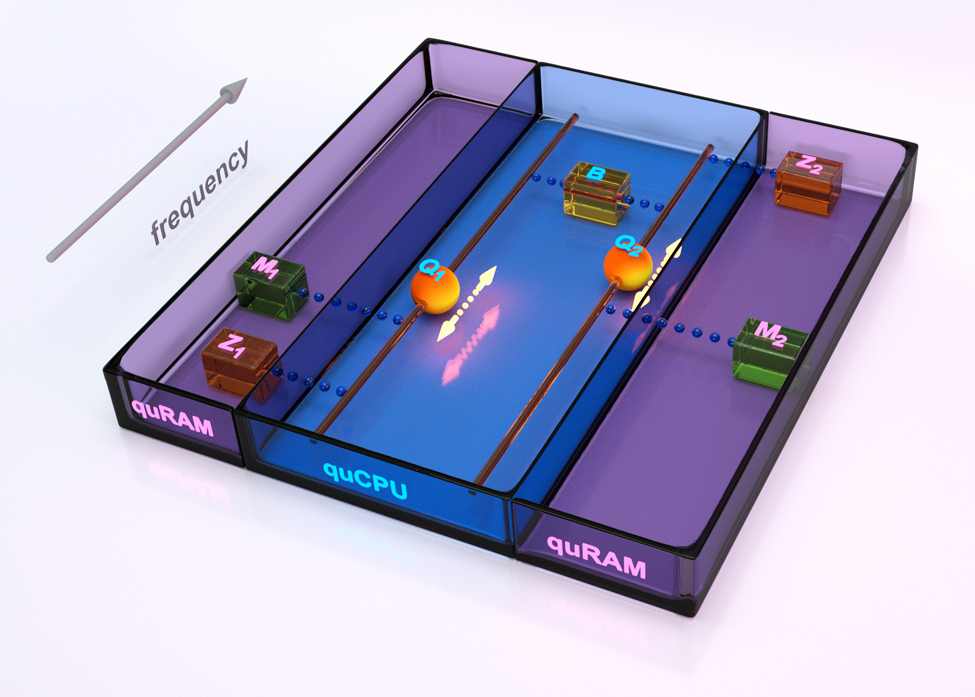
How much longer before the first Quantum computer will appear. This has the potential to revolutionize the computer world.
Boffin melds quantum processor with quantum RAM • The Register
In his quantum computer, he says, computational steps take a few billionths of a second, which is about the same as you get with a classical computer. But unlike a classical computer, a quantum computer can handle a large number of these calculations simultaneously.
Matteo Mariantoni and his quantum computer
As Mariantoni explains in a video provided by the University of California at Santa Barabara, where he is a postdoctoral fellow, the two central quantum phenomena upon which quantum computing are based are superposition and entanglement.Quantum computing may still be far from being a viable commercial process, but Mariantoni argues that it's time to get going. "We can ... create something that is very close to a classical processor, and we can use it for implementing pretty complicated quantum softwares," he argues. "My feeling is that, at this stage – and it's really true – industries will be interested in investing money and effort in developing a large-scale quantum computer."
He may be right. With the increasing complexity and cost of shrinking silicon-transistor features in classical computing manufacturing, the possibility of commercial quantum computing is compelling – even if there remains a tremendous amount of work to be done by both researchers and engineers.
Just like there was in the years between Shockley, Bardeen, and Brattain's first demonstration of a transfer resistor in late 1947, and Texas Instrument's marketing of the first commercial silicon transistor in 1954.
Update 20-Jan-2011
Quantum computing could head to 'the cloud', study says.
Quantum computing will use the inherent uncertainties in quantum physics to carry out fast, complex computations. A report in Science shows the trick can extend to "cloud" services such as Google Docs without loss of security. This "blind quantum computing" can be carried out without a cloud computer ever knowing what the data is.
Source BBC: http://www.bbc.co.uk/news/science-environment-16636580
Wednesday, January 18, 2012
U.N. Backs $100 Laptop For World's Kids - OLPC
Update 18 Jan 2012

OLPC announced the XO 3.0 tablet yesterday, and today we had a chance to sit down with the company's CTO, Ed McNierney and Marvell's Chief Marketing Officer Tom Hayes, who gave us a tour of the new tablet. The XO 3.0 is powered by Marvell Armada PXA618 silicon, which lowers the power requirements of the tablet to a scant 2 watts. That chip, along with the custom charging circuitry developed by OLPC and Marvell means that the tablet can be charged by a hand crank at a 10:1 ratio (10 minutes of usage time for every minute spent cranking), or by the optional four watt solar panel cover at a 2:1 ratio on sunny days. Like other OLPC devices, the XO 3.0 is customizable to customer needs -- so you can get the CPU clocked at 800Mhz or 1GHz, a 1500 - 1800 mAh battery, and your choice of a Pixel Qi or standard LCD display. The slate comes with 512MB of RAM, 4GB of NAND storage, USB and USB On-The-Go ports, plus the standard OLPC power and sensor input ports as well.
Source: http://www.engadget.com/2012/01/08/olpcs-xo-3-0-tablet-hands-on/
Update 21 May 2008


Give 1 Get 1 scheme will start 12 November for just 2 week. Is finally happing? So far the $100 mark has not been met.
 Updated 23 July 2007
'$100 laptop' production beginsFive years after the concept was first proposed, the so-called $100 laptop is poised to go into mass production. The XO will be produced in Taiwan by Quanta, the world's largest laptop manufacturer.
Updated 10-Jan-2007
Public can purchase 100$ laptop
But customers will have to buy two laptops at once - with the second going to the developing world.
Updated 02-Jan-2007
The 100$ laptop program launches in 2007 read more at BBC
More info:
MIT
100$ laptop homepage (laptop.org/)
Why not sell these Laptops (developed by MIT) in the West for double the price so for each laptop sold in the "developed world" a free laptop can be given to the "World's Kids".
U.N. Backs $100 Laptop For World's Kids
Updated 08 June 2007
 ASUS has announced a $199,- laptop at Computex 2007
Asus' Eee PC 701. The $199 price tag seemed to be for real, but that's probably just the starting point. A version for "English speaking countries" could hit the streets "as early as August this year".
See: engadget
Will this mean competition for the $100,- laptop program?

OLPC announced the XO 3.0 tablet yesterday, and today we had a chance to sit down with the company's CTO, Ed McNierney and Marvell's Chief Marketing Officer Tom Hayes, who gave us a tour of the new tablet. The XO 3.0 is powered by Marvell Armada PXA618 silicon, which lowers the power requirements of the tablet to a scant 2 watts. That chip, along with the custom charging circuitry developed by OLPC and Marvell means that the tablet can be charged by a hand crank at a 10:1 ratio (10 minutes of usage time for every minute spent cranking), or by the optional four watt solar panel cover at a 2:1 ratio on sunny days. Like other OLPC devices, the XO 3.0 is customizable to customer needs -- so you can get the CPU clocked at 800Mhz or 1GHz, a 1500 - 1800 mAh battery, and your choice of a Pixel Qi or standard LCD display. The slate comes with 512MB of RAM, 4GB of NAND storage, USB and USB On-The-Go ports, plus the standard OLPC power and sensor input ports as well.
Source: http://www.engadget.com/2012/01/08/olpcs-xo-3-0-tablet-hands-on/
Update 21 May 2008
Second generation OLPC
Smaller with a touch screen and a price of 75 dollars.


CAMBRIDGE, Mass. — One Laptop per Child (OLPC), a non-profit organization focused on providing educational tools to help children in developing countries "learn learning," announced today that work is already underway on a second- generation version of its revolutionary XO laptop computer. Leveraging new advances in technology, the primary goal of the "XO-2" will be to advance new concepts of learning as well as to further drive down the cost of the laptop so that it is affordable for volume purchase by developing nations.
Update 10 January 2008According to Negroponte OLPC and Microsoft are working on a dualboot facility this will enable the OLPC to run a slimmed down version of XP or Fedora Linux.
Negroponte also mention the possibility of a cooperation between Olpc and the Bill & Melinda Gates Foundation.
Source: Tweakers.net
Updated 27 November 2007
Politics stifling $100 laptop
A lack of "big thinking" by politicians has stifled a scheme to distribute laptops to children in the developing world, a spokesman has said.
Updated 24 September 2007Negroponte also mention the possibility of a cooperation between Olpc and the Bill & Melinda Gates Foundation.
Source: Tweakers.net
Updated 27 November 2007
Politics stifling $100 laptop
A lack of "big thinking" by politicians has stifled a scheme to distribute laptops to children in the developing world, a spokesman has said.
Give 1 Get 1 scheme will start 12 November for just 2 week. Is finally happing? So far the $100 mark has not been met.
 Updated 23 July 2007
'$100 laptop' production beginsFive years after the concept was first proposed, the so-called $100 laptop is poised to go into mass production. The XO will be produced in Taiwan by Quanta, the world's largest laptop manufacturer.
Updated 10-Jan-2007
Public can purchase 100$ laptop
But customers will have to buy two laptops at once - with the second going to the developing world.
Updated 02-Jan-2007
The 100$ laptop program launches in 2007 read more at BBC

More info:
MIT
100$ laptop homepage (laptop.org/)
Why not sell these Laptops (developed by MIT) in the West for double the price so for each laptop sold in the "developed world" a free laptop can be given to the "World's Kids".
U.N. Backs $100 Laptop For World's Kids
Updated 08 June 2007
 ASUS has announced a $199,- laptop at Computex 2007
Asus' Eee PC 701. The $199 price tag seemed to be for real, but that's probably just the starting point. A version for "English speaking countries" could hit the streets "as early as August this year".
See: engadget
Will this mean competition for the $100,- laptop program?
Friday, January 13, 2012
BBC News - Real-life Jedi: Pushing the limits of mind control

The headset, which was developed by Australian company Emotiv for the games industry, has been around for some time. But it is only now that companies such as IBM are beginning to harness the wealth of data that it can provide.
Using software developed in-house, researchers have linked the Emotiv to devices such as a model car, a light switch and a television.
"We linked the headset to the IBM middleware, and when he pushed the cube on the screen, that behaved like a click of the mouse - so he was able to use the computer," explained IBM's Kevin Brown.
Many commercial mind control technologies are designed to restore physical ability to those who have lost it.
At Switzerland's Ecole Polytechnique Federale de Lausanne (EPFL), researchers have applied brain-computer interface technology to create thought-controlled wheelchairs and telepresence robots.
For those who prefer pedal power, Toyota is working with Saatchi & Saatchi, Parlee Cycles and DeepLocal to develop a bicycle which can shift gear based on its rider's thoughts.
Friday, December 09, 2011
High school senior kills cancer with nanotech, still can't legally drink -- Engadget
High school senior kills cancer with nanotech, still can't legally drink -- Engadget
17-year old medical prodigy Angela Zhang from Cupertino was just awarded the Siemens Foundation grand prize -- a $100,000 payday -- for her work "Design of Image-guided, Photo-thermal Controlled Drug Releasing Multifunctional Nanosystem for the Treatment of Cancer Stem Cells." It's certainly a mouthful, but this nanotech is what one fellow researcher's calling the "Swiss Army knife of cancer treatment," as her gold and iron-oxide nanoparticle does double duty delivering the drug salinomycin to a tumor site, in addition to aiding MRI and photoacoustic imaging.
BBC News - China and Bill Gates discuss nuclear reactor plan
BBC News - China and Bill Gates discuss nuclear reactor plan
China is set to start work on a novel design for a nuclear reactor with the help of a firm founded by Bill Gates.
Terrapower is working on a design for what is known as a travelling wave reactor. This uses depleted uranium as its power source and is believed to produce less nuclear waste than other designs.
Terrapower is working on a design for what is known as a travelling wave reactor. This uses depleted uranium as its power source and is believed to produce less nuclear waste than other designs.
BBC News - Nanoparticle hollowing method promises medical advances

BBC News - Nanoparticle hollowing method promises medical advances
A process to "carve" highly complicated shapes into nanoparticles has been unveiled by a team of researchers. The researchers added that the technique could also aid drug delivery. "It's a wonderful molecular suitcase," said Prof Puntes.
The research was carried out by the Catalan Institute of Nanotechnology in Bellaterra, Spain and is published in an issue of Science.
However, the professor acknowledged that at this early stage he could only guess at the eventual uses such nanomaterials would have.
"When people first invented plastic they didn't know what to do with it, we knew electricity was around for over a thousand years before we learned how to do something useful with it," Prof Puntes said.
"This creates different materials so they will probably have lots of different properties."
Wednesday, November 30, 2011
Scientists use inkjet to print scaffolds for growing bones | News | The Engineer

Scientists use inkjet to print scaffolds for growing bones | News | The Engineer
Read more: http://www.theengineer.co.uk/sectors/medical-and-healthcare/news/scientists-use-inkjet-to-print-scaffolds-for-growing-bones/1011092.article#ixzz1fCEBlaiu
Washington State University (WSU) researchers have used a 3D printer to create a bone-like material.
The inkjet printer is reportedly able to generate structures that can be used in orthopaedic procedures and dental work. These same structures could also be used to deliver medicine for treating osteoporosis.
The authors report on successful in vitro tests in the journal Dental Materials and say they’re already seeing promising results with in vivo tests on rats and rabbits.
Susmita Bose, co-author and a professor at WSU’s school of mechanical and materials engineering, said that it’s possible that doctors will be able to custom order replacement bone tissue in a few years.
Monday, November 28, 2011
New state of matter seen on cheap

The state of matter is a plasma like those in conventional nuclear fusion tests, but at higher densities.
The professor behind the demonstration says it can be achieved for a mere £10.
In fact, it's just a water-hammer effect, an impact that shatters the liquid column, creating a trail of bubbles that are clearly visible in daylight. "When the bubbles collapse," Professor Sella explains, "they generate incredibly high temperatures - 10 thousand degrees. That's twice the temperature of the surface of the Sun."
Professor Putterman is emphatic: "We have not yet succeeded - no-one has yet succeeded - in generating nuclear fusion inside these bubbles. However, we're looking around for that trick that could boost our parameters by a factor of 10, to get it to the region of fusion." "I can't wait to tell my nuclear physicist friends, that for a cost of around £10, I'm up in the region that they do for the cost of hundreds of millions of pounds. It's very exciting."
Thursday, November 24, 2011
Portable breast cancer detector | Ubergizmo

Portable breast cancer detector | Ubergizmo
Nihon University’s exhibit is tipped to be further refined so that it will see action by being used to perform easy cancer tests at just about anywhere, be it at home or at a public area.
Researchers over at the Nihon University used a technology known as “phase shift method”, where light-emitting and light-receiving elements which rely on LEDs were formed on the surface so that it can be applied to the breast. A light with a wavelength of 850nm is emitted, where light reflected from the breast will be detected. As a cancerous part will reflect a slightly different color, it will be easier to detect any cancer in its early stages.
Subscribe to:
Posts (Atom)