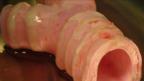
Grow synthetic organs in the lab
Growing synthetic windpipes, artificial skin and replacement blood vessels is now a reality, but scientists are now turning their attention to their ultimate goal: growing new human kidneys or hearts.
In June 2011, an Eritrean man entered an operating theatre with a cancer-ridden windpipe, but left with a brand new one. People had received windpipe transplants before, but Andemariam Teklesenbet Beyene’s was different. His was the first organ of its kind to be completely grown in a lab using the patient's own cells.
The practicalities are, as you can imagine, less straightforward. Take the example I have already described. The process began with researchers taking 3D scans of Beyene’s windpipe, and from these scans Alexander Seifalian at University College London built an exact replica from a special polymer and a glass mould. This was flown to Sweden, where surgeon Paolo Macchiarini seeded this scaffold with stem cells taken from Beyene’s bone marrow. These stem cells, which can develop into every type of cell in the body, soaked into the structure and slowly recreated the man’s own tissues. The team at Stockholm’s Karolinska University Hospital incubated the growing windpipe in a bioreactor – a vat designed to mimic the conditions inside the human body.
Two days later, Macchiarini transplanted the windpipe during a 12-hour operation, and after a month, Beyene was discharged from the hospital, cancer-free. A few months later, the team repeated the trick with another cancer patient, an American man called Christopher Lyles.
“A good way to think about it is that there are four levels of complexity,” says Anthony Atala from the Wake Forest Institute for Regenerative Medicine, one of the leaders of the field. The first level includes flat organs like skin, which comprise just a few types of cells. Next up are tubes, like windpipes or blood vessels, with slightly more complex shapes and more varied collections of cells. The third level includes hollow sac-like organs, like the bladder or stomach. Unlike the tubes, which just act as pipes for fluid, these organs have to perform on demand – secreting, expanding or filtering as the situation arises.
Even after scientists successfully devise ways of growing organs, there are many logistical challenges to overcome before these isolated success stories can become everyday medical reality. “Can you manufacture them and grow them on large scales?” asks Robert Langer, a pioneer in the field. “Can you create them reproducibly? Can you preserve them [in the cold] so they have a reasonable shelf-life? There are a lot of very important engineering challenges to overcome.”
Source: http://www.bbc.com/future/story/20120223-will-we-ever-create-organs
Printing a human kidney
Surgeon Anthony Atala demonstrates an early-stage experiment that could someday solve the organ-donor problem: a 3D printer that uses living cells to output a transplantable kidney. Using similar technology, Dr. Atala's young patient Luke Massella received an engineered bladder 10 years ago.
Anthony Atala asks, "Can we grow organs instead of transplanting them?" His lab at the Wake Forest Institute for Regenerative Medicine is doing just that - engineering over 30 tissues and whole organs. Anthony Atala is the director of the Wake Forest Institute for Regenerative Medicine, where his work focuses on growing and regenerating tissues and organs. His team engineered the first lab-grown organ to be implanted into a human - a bladder - and is developing experimental fabrication technology that can "print" human tissue on demand.
In 2007, Atala and a team of Harvard University researchers showed that stem cells can be harvested from the amniotic fluid of pregnant women. This and other breakthroughs in the development of smart bio-materials and tissue fabrication technology promises to revolutionize the practice of medicine.
Source: http://www.bbc.com/future/story/20120621-printing-a-human-kidney
Innovative news from the world of technology. Objective is to keep a history of interesting new technology and see if it came to fruition.
Showing posts with label stem cell. Show all posts
Saturday, February 02, 2013
Epigenetic reveal clues to ageing
Why do we develop wrinkles and why do our muscles waste away? Why do our brains and immune systems become less effective with time?
Prof Tim Spector, the author of a book on epigenetics, Identically Different, said: "There are epigenetic drugs in development, four for cancer. In terms of lifestyle, we know that exercise can switch off the main obesity genes epigenetically.
"Apart from stem cells, this is the hot area of ageing at the moment, finding ways of encouraging our genes to remain healthy is going to be a top priority in the next few years."
Source: http://www.bbc.co.uk/news/health-18400219
Epigenetics is all about changing the way our genes function by turning them off or making them more active.
Genes are the blueprint for building the human body. There's a copy of the whole blueprint in nearly every cell in the body, but clearly you don't need to use all of it all of the time. Bone cells will use different bits of the blueprint to nerve cells or light sensing cells in the eye.
Manel Esteller's team, at the Bellvitge Biomedical Research Institute, has shown that this control over the blueprint decays over time.
Adding small chemicals, methyl groups, to specific points of DNA is one of the main ways of turning a gene off.
Longer or healthier life?
It is possible to change a person's epigenome. Studies have already shown how a pregnant mother's diet can affect her child's risk of obesity epigenetically.
Prof Tim Spector, the author of a book on epigenetics, Identically Different, said: "There are epigenetic drugs in development, four for cancer. In terms of lifestyle, we know that exercise can switch off the main obesity genes epigenetically.
"Apart from stem cells, this is the hot area of ageing at the moment, finding ways of encouraging our genes to remain healthy is going to be a top priority in the next few years."
Source: http://www.bbc.co.uk/news/health-18400219
Monday, January 21, 2013
Leprosy bacteria use 'biological alchemy'
Infectious bacteria have for the first time been caught performing "biological alchemy" to transform parts of a host body into those more suited to their purposes, by a team in Edinburgh.
The study, in the journal Cell, showed leprosy-causing bacteria turning nerves into stem cells and muscle.
The authors said the "clever and sophisticated" technique could further therapies and stem-cell research.
Prof Rambukkana also believes it is "probable" that other species of bacteria would have evolved the same ability to reprogramme their host.
Prof Chris Mason, a specialist in stem cell research at University College London, said: "The ability of bacteria to convert one mammalian cell type to another is 'alchemy' by nature on a grand scale.
"The next essential step is to translate this valuable piece of knowledge into tangible benefits for patients - a process that may take a decade before its relevance to clinical medicine is fully understood."
Prof Diana Lockwood, from the London School of Hygiene and Tropical Medicine, said: "Their finding that bacteria can reprogramme cells is very interesting and exciting."
Dr Rob Buckle, head of regenerative medicine at the Medical Research Council, said: "This discovery is important not just for our understanding and treatment of bacterial disease, but for the rapidly progressing field of regenerative medicine."
Source: http://www.bbc.co.uk/news/health-21056644
The study, in the journal Cell, showed leprosy-causing bacteria turning nerves into stem cells and muscle.
The authors said the "clever and sophisticated" technique could further therapies and stem-cell research.
Prof Rambukkana also believes it is "probable" that other species of bacteria would have evolved the same ability to reprogramme their host.
Prof Chris Mason, a specialist in stem cell research at University College London, said: "The ability of bacteria to convert one mammalian cell type to another is 'alchemy' by nature on a grand scale.
"The next essential step is to translate this valuable piece of knowledge into tangible benefits for patients - a process that may take a decade before its relevance to clinical medicine is fully understood."
Prof Diana Lockwood, from the London School of Hygiene and Tropical Medicine, said: "Their finding that bacteria can reprogramme cells is very interesting and exciting."
Dr Rob Buckle, head of regenerative medicine at the Medical Research Council, said: "This discovery is important not just for our understanding and treatment of bacterial disease, but for the rapidly progressing field of regenerative medicine."
Source: http://www.bbc.co.uk/news/health-21056644
Wednesday, January 16, 2013
Healing Blind Mice
Blind mice can see again, after researchers transplanted developing cells into their eyes and found they could reform the entire light-sensitive layer of the retina.
Study was led by Dr. Mandeep Singh, an eye surgeon from the National University Hospital of Singapore and a clinician-scientist with the Singapore Eye Research Institute (SERI), while he was a Ph.D. student with Professor Robert MacLaren at the University of Oxford, U.K.
The researchers worked with mice that were blind due to complete loss of the light-sensing photoreceptor cells in their retinas. This is the most relevant mouse model for treating patients who are blind from retinitis pigmentosa.
The article can be found at: Singh M et al. (2013) Reversal of end-stage retinal degeneration and restoration of visual function by photoreceptor transplantation.
Source: http://www.asianscientist.com/in-the-lab/healing-blind-mice-2013/
Study was led by Dr. Mandeep Singh, an eye surgeon from the National University Hospital of Singapore and a clinician-scientist with the Singapore Eye Research Institute (SERI), while he was a Ph.D. student with Professor Robert MacLaren at the University of Oxford, U.K.
The researchers worked with mice that were blind due to complete loss of the light-sensing photoreceptor cells in their retinas. This is the most relevant mouse model for treating patients who are blind from retinitis pigmentosa.
The article can be found at: Singh M et al. (2013) Reversal of end-stage retinal degeneration and restoration of visual function by photoreceptor transplantation.
Source: http://www.asianscientist.com/in-the-lab/healing-blind-mice-2013/
Tuesday, December 04, 2012
Stem cells being made from blood
A patient's own blood has been used to make personalised stem cells, which doctors hope will eventually be used to treat a range of diseases.
The team at the University of Cambridge says this could be one of the easiest and safest sources of stem cells.
In a study, published in the journal Stem Cells: Translational Medicine, the cells were used to build blood vessels. However, experts cautioned that the safety of using such stem cells was still unclear.
Stem cells are one of the great hopes of medical research. They can transform into any other type of cell the body is built from - so they should be able to repair everything from the brain to the heart, and eyes to bone.
The team at Cambridge looked in blood samples for a type of repair cell that whizzes through the bloodstream repairing any damage to the walls of blood vessels. These were then converted into stem cells.
Dr Amer Rana said this method was better than taking samples from skin.
Prof Chris Mason, an expert on regenerative medicine at University College London, said there was some "beautiful work" coming out of the lab in Cambridge.
The British Heart Foundation said these cells had "great potential".
Source: http://www.bbc.co.uk/news/health-20539835
The team at the University of Cambridge says this could be one of the easiest and safest sources of stem cells.
In a study, published in the journal Stem Cells: Translational Medicine, the cells were used to build blood vessels. However, experts cautioned that the safety of using such stem cells was still unclear.
Stem cells are one of the great hopes of medical research. They can transform into any other type of cell the body is built from - so they should be able to repair everything from the brain to the heart, and eyes to bone.
The team at Cambridge looked in blood samples for a type of repair cell that whizzes through the bloodstream repairing any damage to the walls of blood vessels. These were then converted into stem cells.
Dr Amer Rana said this method was better than taking samples from skin.
Prof Chris Mason, an expert on regenerative medicine at University College London, said there was some "beautiful work" coming out of the lab in Cambridge.
The British Heart Foundation said these cells had "great potential".
Source: http://www.bbc.co.uk/news/health-20539835
Thursday, July 26, 2012
Ground-breaking windpipe-transplant child 'doing well'
The first child to have pioneering surgery to rebuild his windpipe with his own stem cells is doing well and is back in school.
Instead of growing a new windpipe, they took a donor windpipe and stripped it of all the donor's cells. What was left was a three-dimensional web of collagen fibres which was transplanted into Ciaran. Meanwhile, stem cells, which can become any other type of cell, from nerve to skin cells, were taken from Ciaran's bone marrow. These were then sprayed onto the newly transplanted windpipe. The surgery had been tried once before in Spain, in 2008, on a 30-year-old woman, but Ciaran was the first child.
Surgeon, Prof Martin Birchall, speaking in 2010: "It could replace transplantation"
He has been monitored for the past two years and the details have been published in the Lancet.
Bron: http://www.bbc.co.uk/news/health-18980915
Instead of growing a new windpipe, they took a donor windpipe and stripped it of all the donor's cells. What was left was a three-dimensional web of collagen fibres which was transplanted into Ciaran. Meanwhile, stem cells, which can become any other type of cell, from nerve to skin cells, were taken from Ciaran's bone marrow. These were then sprayed onto the newly transplanted windpipe. The surgery had been tried once before in Spain, in 2008, on a 30-year-old woman, but Ciaran was the first child.
Surgeon, Prof Martin Birchall, speaking in 2010: "It could replace transplantation"
He has been monitored for the past two years and the details have been published in the Lancet.
Bron: http://www.bbc.co.uk/news/health-18980915
Thursday, May 10, 2012
BBC News - Stem cell shield 'could protect cancer patients'
It may be possible to use "stem cell shielding" to protect the body from the damaging effects of chemotherapy, early results from a US trial suggest.
Chemotherapy drugs try to kill rapidly dividing cancer cells, but they can also affect other healthy tissues such as bone marrow. A study, in Science Translational Medicine, used genetically modified stem cells to protect the bone marrow.
Researchers at the Fred Hutchinson Cancer Research Center, in Seattle, said these effects were "a major barrier" to using chemotherapy and often meant the treatment had to be stopped, delayed or reduced.
'Protective shields'
They have tried to protect the bone marrow in three patients with a type of brain cancer, glioblastoma.
One of the researchers, Dr Jennifer Adair, said: "This therapy is analogous to firing at both tumour cells and bone marrow cells, but giving the bone marrow cells protective shields while the tumour cells are unshielded."
The researchers said the three patients had all lived longer than the average survival time of 12 months for the cancer. They said one patient was still alive 34 months after treatment.
Cancer Research UK scientist Prof Susan Short said: "This is a very interesting study and a completely new approach to protecting normal cells during cancer treatment.
"It needs to be tested in more patients but it may mean that we can use temozolomide [a chemotherapy drug] for more brain tumour patients than we previously thought. "This approach could also be a model for other situations where the bone marrow is affected by cancer treatment."
Source: BBC News - Stem cell shield 'could protect cancer patients'
Chemotherapy drugs try to kill rapidly dividing cancer cells, but they can also affect other healthy tissues such as bone marrow. A study, in Science Translational Medicine, used genetically modified stem cells to protect the bone marrow.
Researchers at the Fred Hutchinson Cancer Research Center, in Seattle, said these effects were "a major barrier" to using chemotherapy and often meant the treatment had to be stopped, delayed or reduced.
'Protective shields'
They have tried to protect the bone marrow in three patients with a type of brain cancer, glioblastoma.
One of the researchers, Dr Jennifer Adair, said: "This therapy is analogous to firing at both tumour cells and bone marrow cells, but giving the bone marrow cells protective shields while the tumour cells are unshielded."
The researchers said the three patients had all lived longer than the average survival time of 12 months for the cancer. They said one patient was still alive 34 months after treatment.
Cancer Research UK scientist Prof Susan Short said: "This is a very interesting study and a completely new approach to protecting normal cells during cancer treatment.
"It needs to be tested in more patients but it may mean that we can use temozolomide [a chemotherapy drug] for more brain tumour patients than we previously thought. "This approach could also be a model for other situations where the bone marrow is affected by cancer treatment."
Source: BBC News - Stem cell shield 'could protect cancer patients'
Wednesday, February 15, 2012
Stem-Cell Studies
01-Nov-2010
BBC News - Miniature livers 'grown in lab'
Scientists have managed to produce a small-scale version of a human liver in the laboratory using stem cells.
The success increases hope that new transplant livers could be manufactured, although experts say that this is still many years away.
The team from Wake Forest University Baptist Medical Center presented its findings at a conference in Boston.
Update Oct-2011
Geron Starts First Human Embryonic Stem-Cell Study - BusinessWeek: "Oct. 11 (Bloomberg) -- Geron Corp. used a therapy made from stem cells taken from human embryos to treat a patient paralyzed by a spinal-cord injury in the first U.S.-authorized test of the technology."
Update 24-Jan-2012
Once they were blind, now they see. Patients cured by stem cell 'miracle'.
Two blind people have shown signs of being able to see again – despite having incurable eye disease – following a revolutionary operation involving the transplant of stem cells derived from a human embryo.
"Despite the progressive nature of these conditions, the vision of both patients appears to have improved after transplantation of the cells, even at the lowest dosage," said Robert Lanza, chief scientific officer of Advanced Cell Technology, the Massachusetts company that supplied the cells. "This is particularly important, since the ultimate goal of this therapy will be to treat patients earlier in the course of the disease where more significant results might potentially be expected," Dr Lanza said.
In a separate clinical trial being conducted in Britain by Professor Douglas Bainbridge, a 34-year-old Yorkshire man suffering from Stargardt's disease underwent an embryonic stem cell transplant in his right eye last Friday at Moorfields Eye Hospital in London.
Source: http://www.independent.co.uk/news/science/once-they-were-blind-now-they-see-patients-cured-by-stem-cell-miracle-6293706.html
Update 31-Jan-2012
Skin transformed into brain cells.
Skin cells have been converted directly into cells which develop into the main components of the brain, by researchers studying mice in California. The experiment, reported in Proceedings of the National Academy of Sciences, skipped the middle "stem cell" stage in the process.
Stem cells, which can become any other specialist type of cell from brain to bone, are thought to have huge promise in a range of treatments. Many trials are taking place, such as in stroke patients or specific forms of blindness.
Dr Deepak Srivastava, who has researched converting cells into heart muscle, said the study: "Opens the door to consider new ways to regenerate damaged neurons using cells surrounding the area of injury."
Source: http://www.bbc.co.uk/news/health-16788809
Update 15-Feb-2012
Bone marrow stem cells give 'some' heart Hearing
Bone marrow stem cell therapy offers "moderate improvement" to heart attack patients, according to a large UK review of clinical trials.
The report by Cochrane pooled the data from all 33 bone marrow trials which had taken place up to 2011.
It concluded that bone marrow therapy "may lead to a moderate long-term improvement" in heart function which "might be clinically very important".
Lead author Dr Enca Martin-Rendon, from NHS Blood and Transplant at the John Radcliffe Hospital in Oxford, said: "This new treatment may lead to moderate improvement in heart function over standard Treatments. "Stem cell therapy may also reduce the number of patients who later die or suffer from heart failure, but currently there is a lack of statistically significant evidence based on the small number of patients treated so far."
Prof Anthony Mathur, from Barts and the London School of Medicine and Dentistry, is leading the largest ever trial of stem cells in heart attack patients.
Source: http://www.bbc.co.uk/news/health-17025593
Update: 15-Feb-2012
Stem cells used to 'heal' heart attack scars
Damage caused by a heart attack has been healed using stem cells gathered from the patient's own heart, according to doctors in the US. The amount of scar tissue was halved in the small safety trial reported in the Lancet medical journal.
Prof Anthony Mathur is co-ordinating a stem cell trial involving 3,000 heart attack patients.
Prof Jeremy Pearson, associate medical director at the British Heart Foundation, said: "It's the first time these scientists' potentially exciting work has been carried out in humans, and the results are very encouraging.
Source: http://www.bbc.co.uk/news/health-17012688
Update 15-Feb-2012
Bone marrow stem cells give 'some' heart Hearing
Bone marrow stem cell therapy offers "moderate improvement" to heart attack patients, according to a large UK review of clinical trials.
The report by Cochrane pooled the data from all 33 bone marrow trials which had taken place up to 2011.
It concluded that bone marrow therapy "may lead to a moderate long-term improvement" in heart function which "might be clinically very important".
Lead author Dr Enca Martin-Rendon, from NHS Blood and Transplant at the John Radcliffe Hospital in Oxford, said: "This new treatment may lead to moderate improvement in heart function over standard Treatments. "Stem cell therapy may also reduce the number of patients who later die or suffer from heart failure, but currently there is a lack of statistically significant evidence based on the small number of patients treated so far."
Prof Anthony Mathur, from Barts and the London School of Medicine and Dentistry, is leading the largest ever trial of stem cells in heart attack patients.
Source: http://www.bbc.co.uk/news/health-17025593
Update: 15-Feb-2012
Stem cells used to 'heal' heart attack scars
Damage caused by a heart attack has been healed using stem cells gathered from the patient's own heart, according to doctors in the US. The amount of scar tissue was halved in the small safety trial reported in the Lancet medical journal.
Prof Anthony Mathur is co-ordinating a stem cell trial involving 3,000 heart attack patients.
Prof Jeremy Pearson, associate medical director at the British Heart Foundation, said: "It's the first time these scientists' potentially exciting work has been carried out in humans, and the results are very encouraging.
Source: http://www.bbc.co.uk/news/health-17012688
Subscribe to:
Posts (Atom)